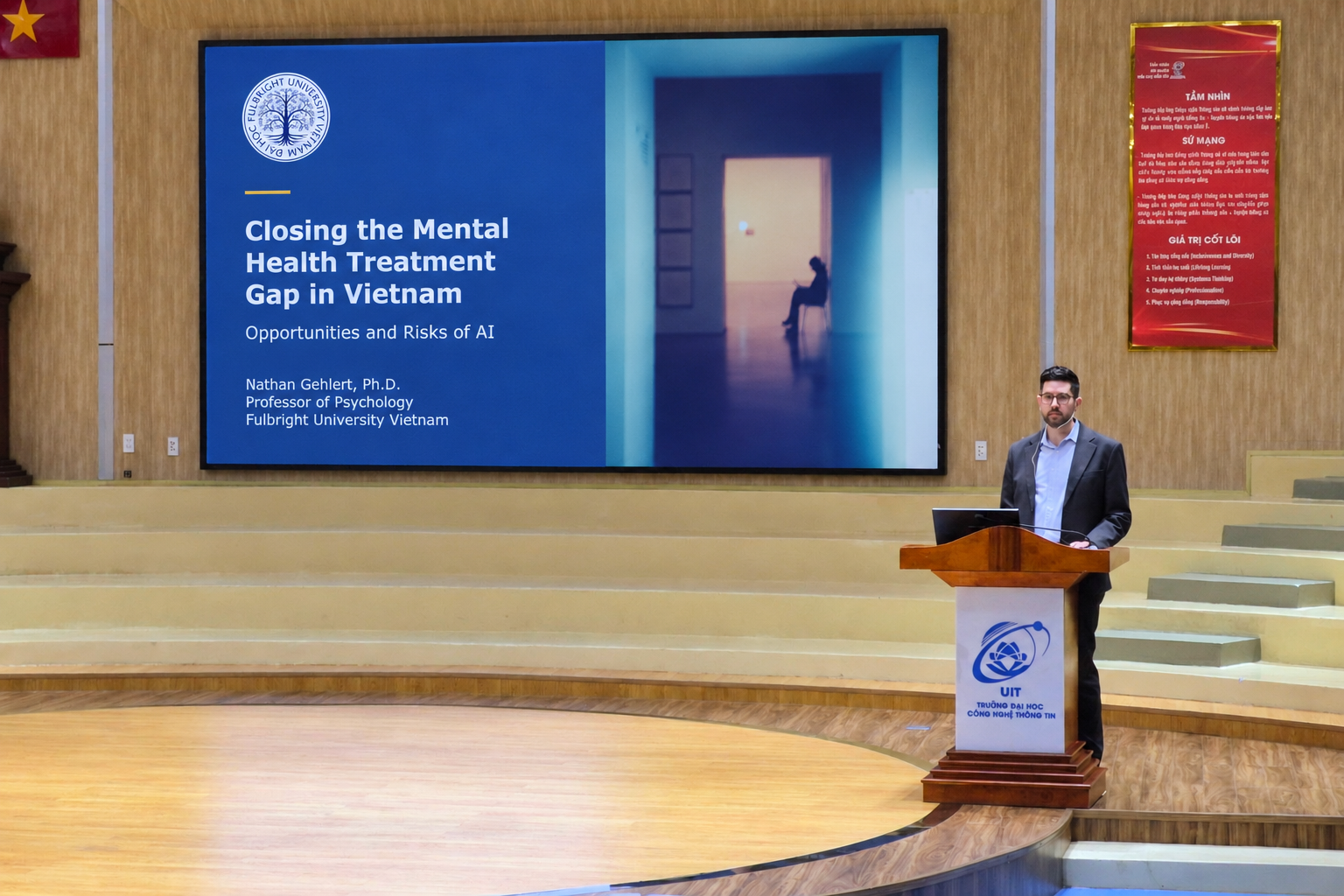
Health Informatics Conference | University of Information Technology, Vietnam National University Ho Chi Minh City | October 2026
Artificial intelligence presents both opportunities and challenges for addressing Vietnam's significant mental health treatment gap. As AI tools become increasingly integrated into how young people seek mental health information and support, important questions arise about their appropriate role in care.
In this presentation, I explored how AI might expand access to quality mental health services through screening, psychoeducation, skills practice, ongoing monitoring, and connections to qualified professionals. I also examined the risks of inaccurate guidance, privacy concerns, cultural and linguistic bias, and excessive reliance on systems that may prioritize agreeableness over clinical responsibility.
The central argument was that AI should strengthen, not replace, human-centered mental health care. Realizing its potential requires careful attention to clinical evidence, ethical safeguards, and the specific needs of Vietnam's mental health system.